Senior UX Designer · 2026
Next Gen Configuration
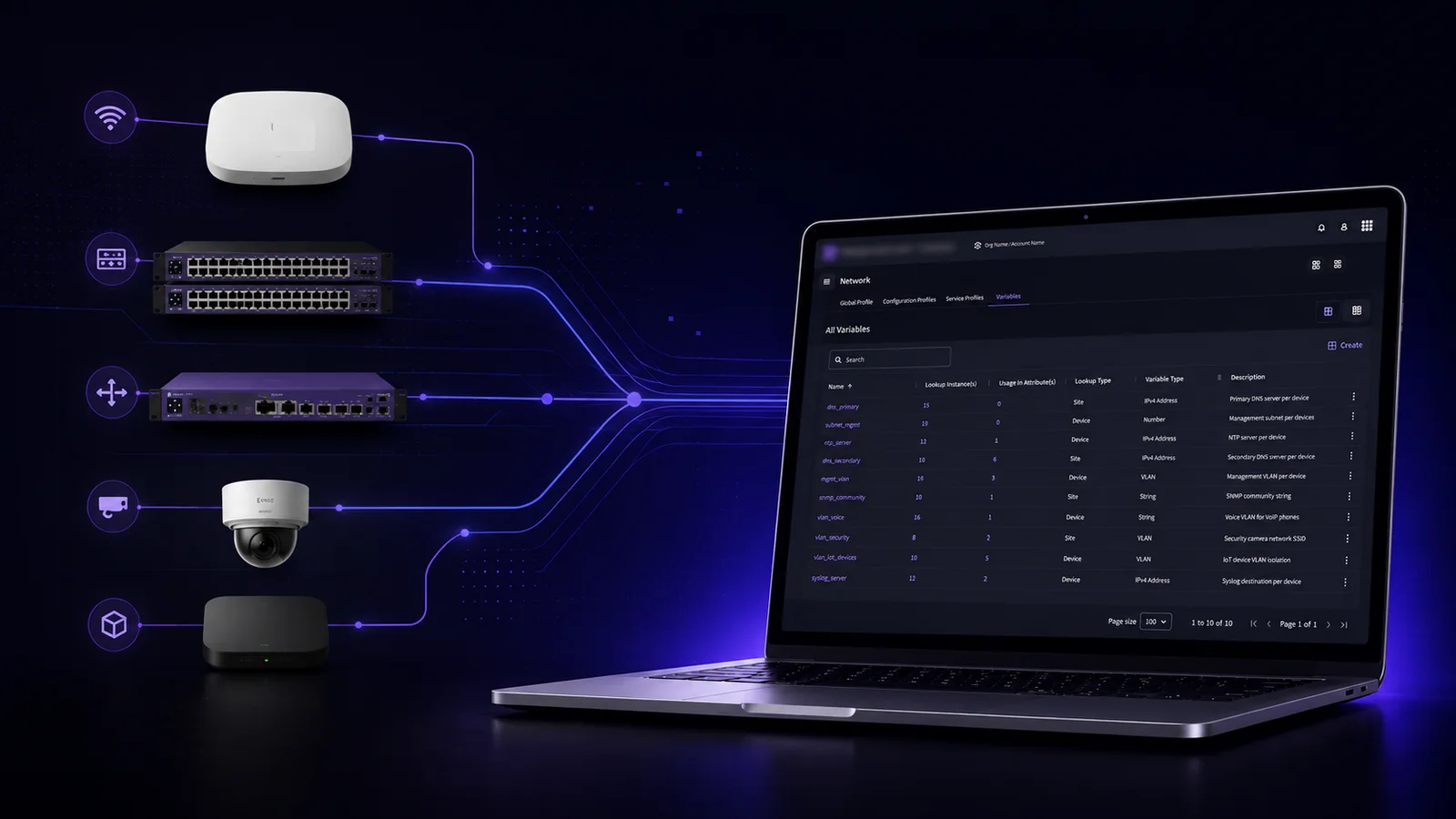
Enterprise customers were re-entering the same configuration value across hundreds of devices, by hand. I designed the framework that let them define it once.
- Role
- Senior UX Designer, Framework Team
- Timeline
- Nov 2025 – Feb 2026
- Platform
- Web app — enterprise network configuration
- Agency
- Orangebits Digital Solutions
Confidential — This project is under NDA. The client, the product's real name, and all identifying branding have been withheld or redacted.
01 — The short version
What I designed, and what it replaced
An enterprise network-hardware vendor was rebuilding its entire device-configuration platform from scratch, replacing a configuration model that hadn't fundamentally changed in twenty years. Four teams built features on it in parallel. I was the Senior UX Designer on the team that designed the layer underneath them.
What that meant in practice: I designed how a configuration value gets defined once and reused everywhere instead of being retyped per device, how an engineer sees where a value actually comes from, what happens when a device's real state disagrees with the profile that governs it, and what “deployed” means when you're pushing to hundreds of devices at once and some of them fail.
Senior UX designers adopted the framework patterns across all product pods
Features across 5 product categories built on the framework
Developers in handoff, with annotated dev-ready files
Twenty years of static configuration
The legacy system supported hardcoded, static configuration values and nothing else. A customer managing hundreds of devices across dozens of sites had to manually re-enter the same values for every deployment — no variables, no reuse, no validation. Twenty years of static configuration, in a market that had moved to dynamic scale.
The rebuild was a P1 Epic tied directly to revenue, customer migration off the legacy product, and market expansion. What customers were asking for was specific: define a value once, and have it resolve to a different result per site, per site group, or per device.
Under NDA